Guided Support
Travellers must follow the decisions of the driver / guide regarding route, pace, stops and turnaround points. Local teams use current road and weather information and may change the itinerary when conditions require it.
Moderate to Challenging
When the valley slows down, Spiti becomes something else.
₹ 28,500per person
Next departure7 Nov 2026
02
The character of the journey.
• A complete nine-day Chandigarh–Kinnaur–Spiti circuit at an unhurried pace.
• Tabo, Ki and Kungri monasteries, with Kibber, Chicham and the high villages when accessible.
• Kinner Kailash views, the Sutlej corridor, Nako and the extraordinary winter high-desert landscape.
• Opportunities for local food, village encounters, photography and cultural exploration.
• Pin Valley and Mudh where winter road conditions permit.
• Locally informed route planning with the flexibility winter travel demands.
• A balance of cultural depth and mountain landscapes, rather than a checklist of stops.
Best for curious travellers who are comfortable with long mountain drives, severe cold, remote accommodation and plans that may change with weather. The trip is not a technical trek, but occasional walking at altitude requires reasonable mobility. Guests should bring proper winter layers and allow time for road delays. Travellers with medical concerns related to altitude should obtain appropriate professional advice before booking. The experience rewards patience, cultural curiosity and a willingness to accept that some villages may be inaccessible in deep winter.
03
A clear day-by-day view, with room for the mountains to shape the experience.
Begin the journey from Chandigarh and drive into the hills towards Narkanda. Use the evening to explore locally, settle in and begin gradual acclimatisation before moving to higher altitude.
The first climb from the plains introduces a slower rhythm of travel, with changing forest and hillside scenery on the way to Narkanda. Use the evening to settle in, understand the route ahead and adjust gradually to the mountain climate before the higher stages of the journey.
Key experienceA gradual first day into the mountains.
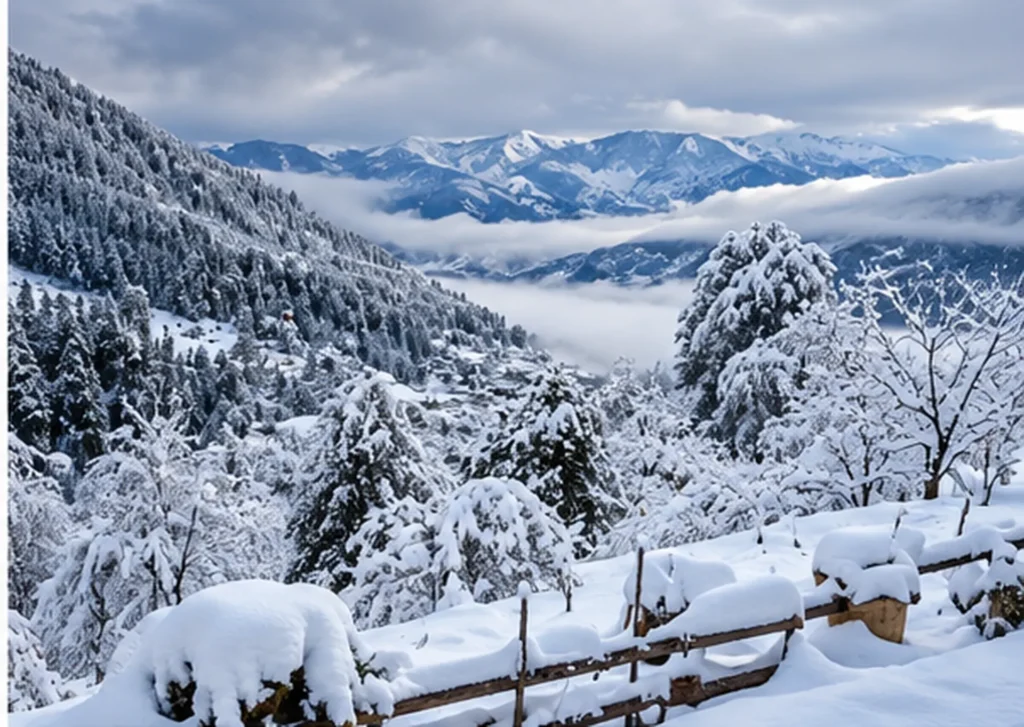
After breakfast, begin the journey to Kalpa. Pass through the Sarahan and Rampur-Bushahr region and continue through the Sutlej valley. Catch views of Kinner Kailash in the Kinnaur Valley before reaching Kalpa for dinner and overnight stay.
The drive through Rampur and the Sarahan region follows the Sutlej into Kinnaur, where village architecture and mountain culture begin to change. Kalpa is associated with views of the Kinner Kailash massif, particularly memorable when the weather is clear. Take time for safe viewpoints and a relaxed evening before entering Spiti.
Key experienceKinnaur landscapes and Kinner Kailash views.
After breakfast, set off along the Hindustan–Tibet road. Reach Nako, one of the last major settlements of Kinnaur before entering Spiti. Stop for lunch en route, continue into the Spiti Valley and reach Tabo for dinner and overnight stay.
The Hindustan–Tibet road has connected communities through this demanding terrain for generations. Nako provides a pause on the transition from Kinnaur into Spiti, with its lake and village setting taking on a distinct winter character. The final approach to Tabo brings the group into a much drier and more exposed landscape.
Key experienceEnter Spiti via Nako and the Hindustan–Tibet route.
After breakfast, explore Tabo and visit the historic Tabo Monastery. Continue towards Pin Valley, with Kungri Monastery and Mudh village included when road access permits. Travel through Pin Valley National Park and keep watch for high-altitude wildlife; snow leopard sightings are never guaranteed. Continue to Kaza for dinner and overnight stay.
Tabo Monastery is a major cultural landmark with a long Buddhist history. Beyond it, Pin Valley opens into broad riverbeds and mountain villages; the old itinerary included Kungri Monastery and Mudh. Those stops depend on road access in winter. Wildlife may be encountered, but the elusive snow leopard should never be presented as a promised sighting.
Key experienceTabo, Pin Valley, Kungri and Mudh in one winter day when conditions allow.
After breakfast, drive to Ki Monastery and continue to Kibber village. Explore the high-altitude landscape and, when trail and snow conditions permit, walk towards Chicham and the famed Chicham Bridge. Return to Kaza for the night.
Ki Monastery's hillside setting makes the relationship between faith and mountain life especially vivid. The route continues towards Kibber and, when safe, the gorge and bridge near Chicham. The historic programme mentioned a walk between villages, but the guide should decide whether snow and trail conditions permit it. Return to Kaza with time for the valley rather than rushing every stop.
Key experienceKi Monastery, Kibber and Chicham Bridge.
Begin after breakfast and drive towards Spiti's high villages, subject to winter road access. Visit Komic, Hikkim and its high-altitude post office, and Langza with its Buddha statue and ancient temple landscape. Return to Kaza by evening for dinner and overnight stay.
Hikkim, Komic and Langza offer insight into how high-altitude communities adapt to a short growing season and severe winter. Hikkim's post office, the monastery landscape at Komic and the Buddha figure at Langza are distinctive features of this circuit. Road closures may shorten or rearrange the loop, and the day should remain flexible.
Key experienceHigh villages, Hikkim post office and Langza.
Wake up to a local breakfast and begin the long return journey south from Spiti towards Kinnaur. The drive is condition-led in winter and may take longer depending on snow and road conditions. Reach Kalpa for dinner and overnight stay.
This is a substantial return drive through Spiti and Kinnaur, not an extra sightseeing day. The route retraces landscapes that can look different after days of snow and changing light. Winter traffic, road conditions and daylight determine the actual arrival time; keep the evening free of tight onward connections.
Key experienceLong winter return through Spiti and Kinnaur.
After breakfast, continue the return journey from Kalpa to Narkanda. Reach Narkanda by evening, have dinner and rest overnight.
The return through the Sutlej Valley gradually brings back forests, larger settlements and a different pace of mountain life. Breaks are selected around safe stopping points and the group's needs. The final overnight at Narkanda avoids attempting the entire descent to the plains in one long day.
Key experienceA scenic return through the Sutlej valley.
Enjoy breakfast on the final morning in the mountains, descend from Narkanda to Chandigarh and conclude the Winter Spiti journey. Onward travel towards Delhi can be planned independently.
Enjoy the last mountain morning before descending to Chandigarh. There is time to exchange stories and reflect on the villages and monasteries visited. The tour concludes in Chandigarh; onward connections should include a sensible buffer for weather-related road delays.
04
The practical details, kept clear.
05
Thoughtful preparation makes more space for the experience.
Pack for severe sub-zero winter conditions and changing temperatures between daytime and night.
Snow, ice and wet surfaces demand proper winter protection.
Carry your own medication and basic personal medical requirements.
Hydration is especially important at altitude. Carry practical travel snacks for long road sections.
Cold reduces battery life and charging options can be limited in remote areas.
Keep both identification and enough cash for remote areas where ATMs may be unavailable.
Travel insurance is strongly recommended for a remote winter high-altitude road journey.
06
Clear guidance, experienced support and decisions led by conditions on the mountain.
Safety remains a primary operating consideration. Winter Spiti is run with experienced mountain drivers, guides and local support, with routes adapted to current snow, weather and road information. The journey is planned for comfort, gradual acclimatisation and flexibility rather than forcing a fixed checklist.
Travellers must follow the decisions of the driver / guide regarding route, pace, stops and turnaround points. Local teams use current road and weather information and may change the itinerary when conditions require it.
Difficulty is moderate to challenging because of severe cold, high altitude, long winter road days and occasional walking on snow or uneven terrain. Travellers should arrive with reasonable general fitness and should keep themselves well hydrated throughout the journey.
Emergency first aid and oxygen are part of the operating setup. Local support and first-response networks are used where required, but rescue / evacuation time can be affected by winter roads, distance and weather.
The itinerary reaches very high settlements. Key altitude references from the operating route include Narkanda about 8,888 ft, Pin Valley about 11,500 ft, Kaza about 12,500 ft, Chicham about 13,596 ft, Kibber about 14,010 ft, Hikkim about 14,400 ft, Langza about 14,500 ft and Komic about 15,500 ft. Acclimatisation, hydration and honest health reporting are essential.
Winter Spiti can experience severe sub-zero conditions. Legacy operating guidance cites average winter daytime temperatures around 0°C and nighttime temperatures roughly from -5°C down to -30°C depending on date, elevation and weather. Heavy snowfall can close roads and make planned villages inaccessible.
Proper winter layering, waterproof insulated footwear, gloves, head protection, waterproof outerwear and personal winter essentials are required. Carry sufficient cash and backup power because remote areas may have limited ATM, electricity and network access.
Carry all personal medication and disclose relevant health conditions before travel. Hydrate aggressively at altitude. Travel insurance covering medical emergencies, evacuation and trip disruption is strongly recommended.
No minimum age was supplied in the approved tracker. Suitability should be assessed based on health, winter tolerance, altitude exposure and ability to manage long road days rather than age alone.
The itinerary is a framework, not a guarantee. Snowfall, road closures, traveller health and local conditions can require rerouting, delayed arrival, omission of high villages or use of tractor / 4x4 support. If extra snow-crossing transport is required, the applicable cost is paid on the spot.
07

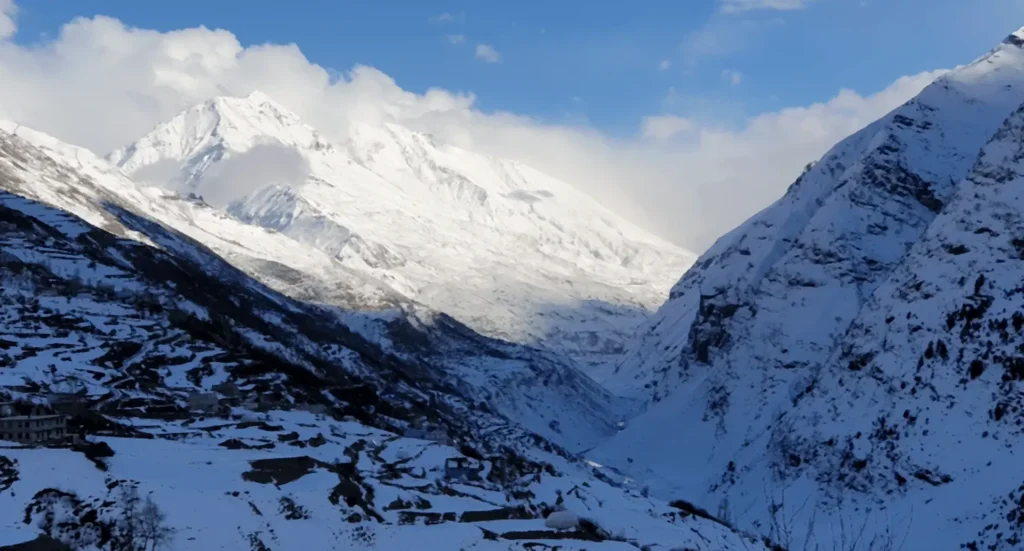
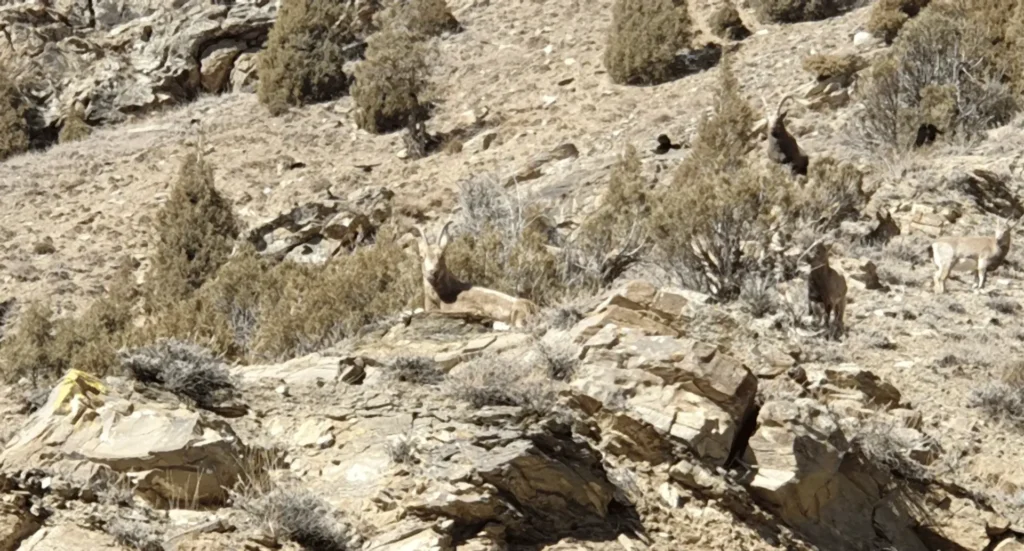
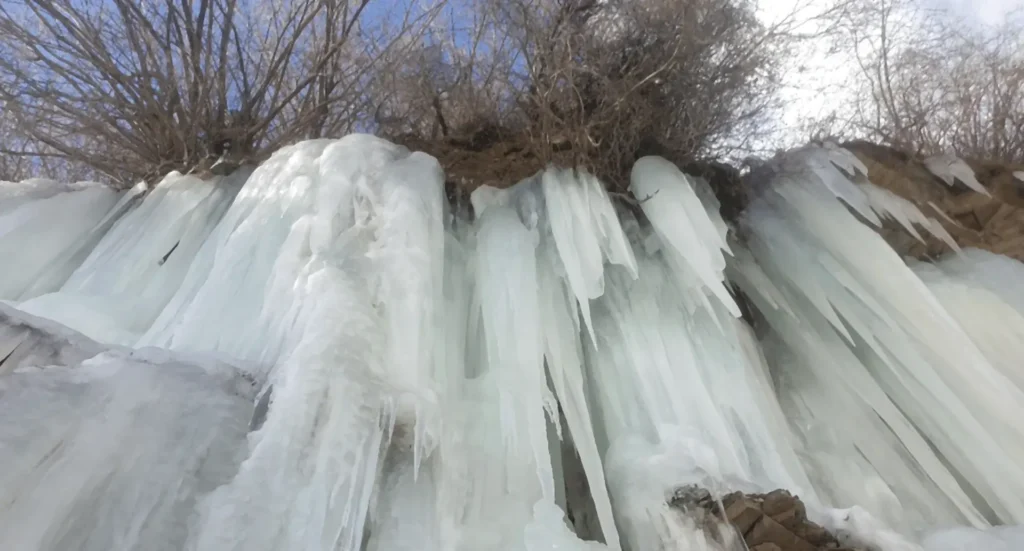
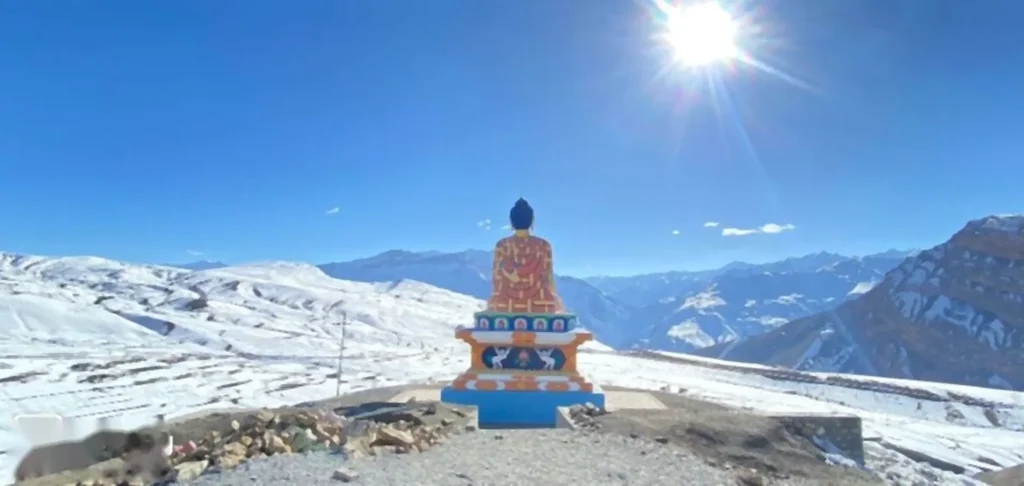
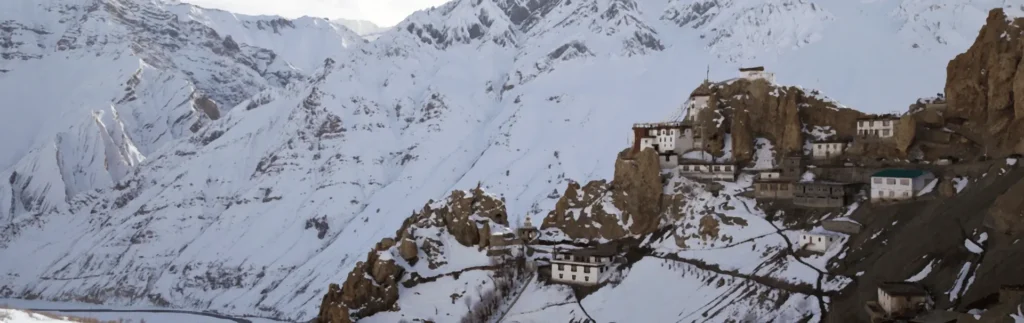
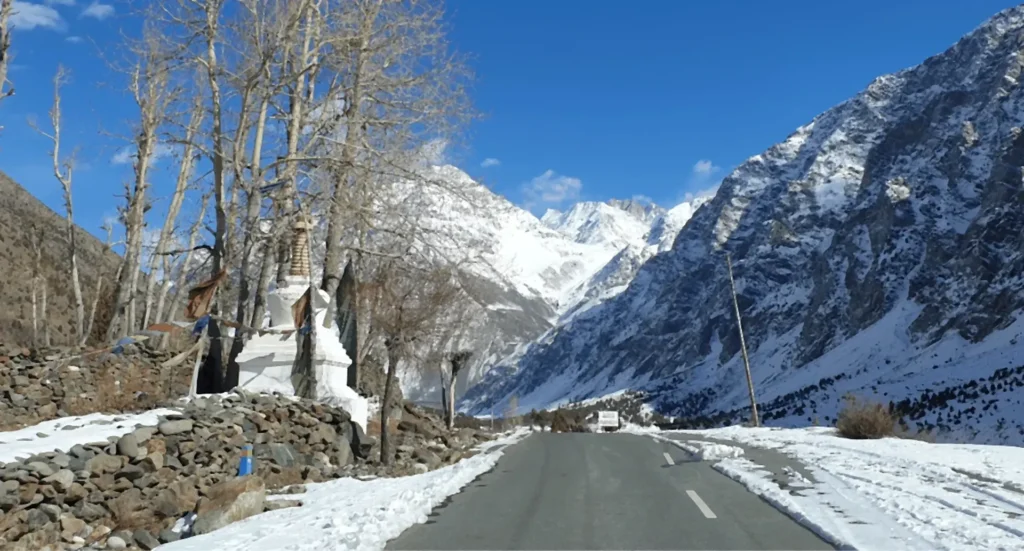
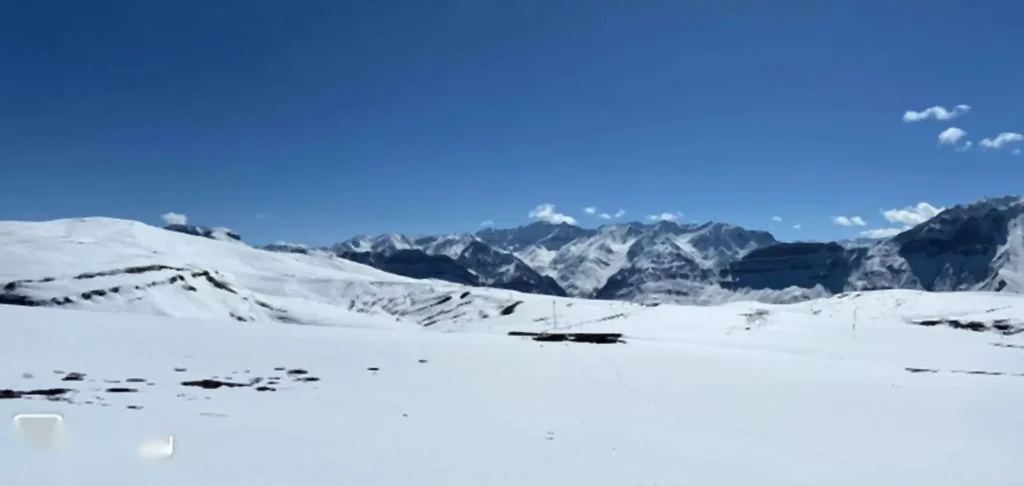
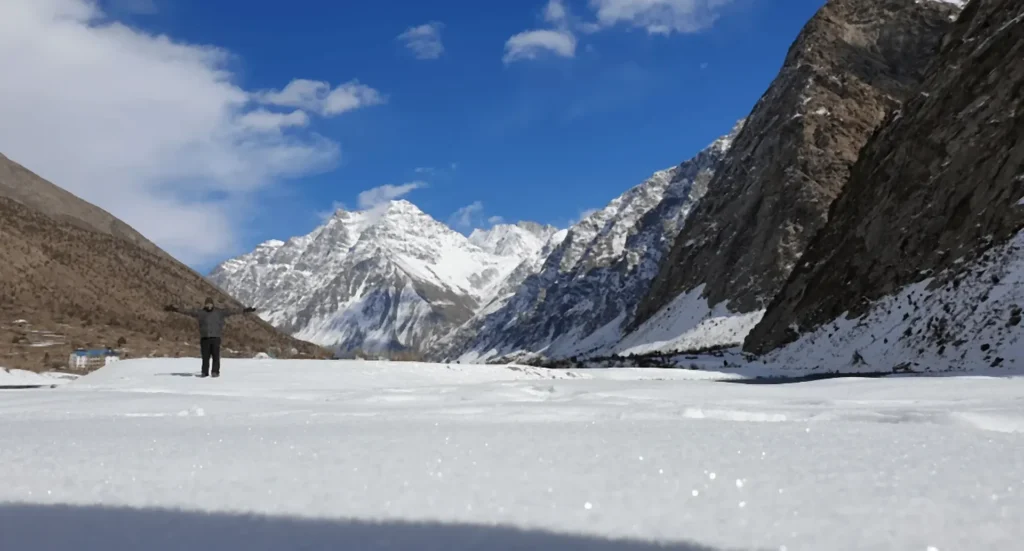
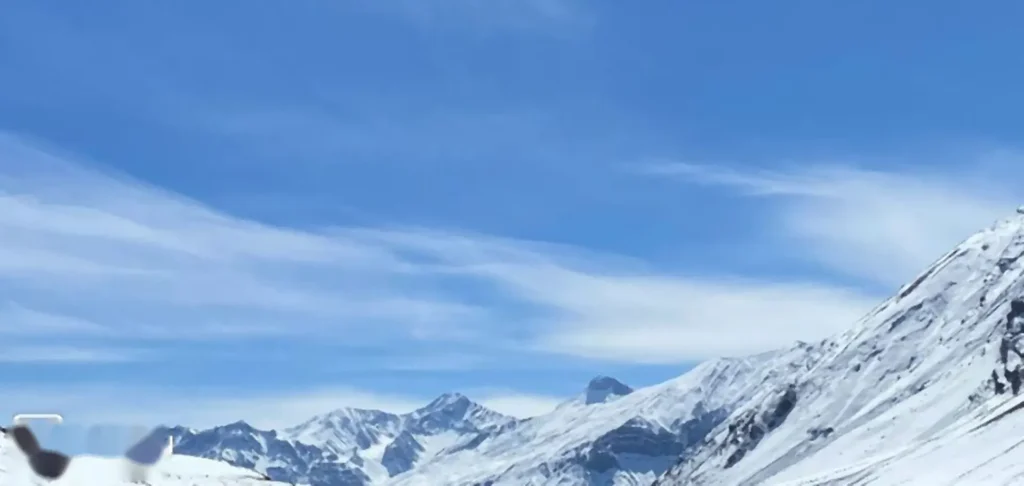
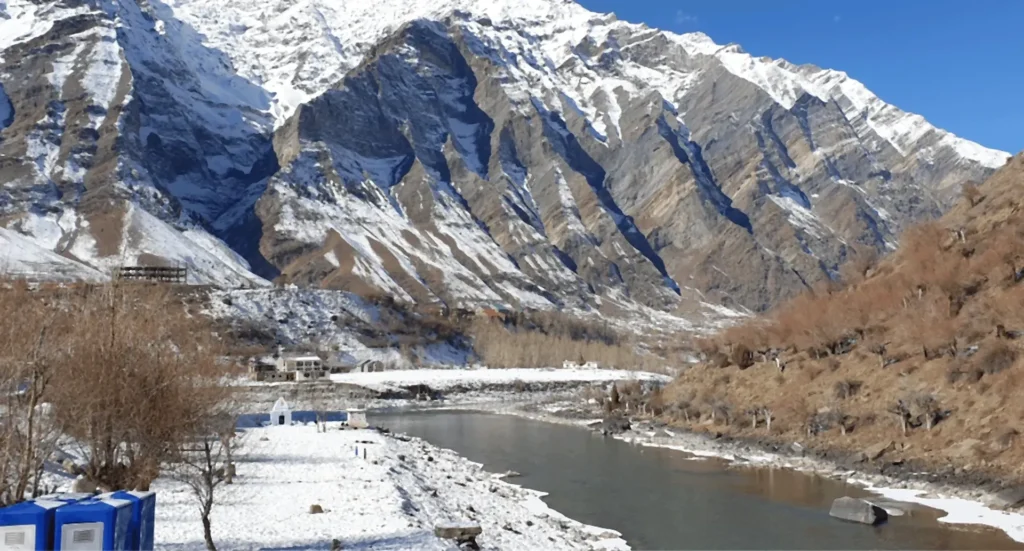
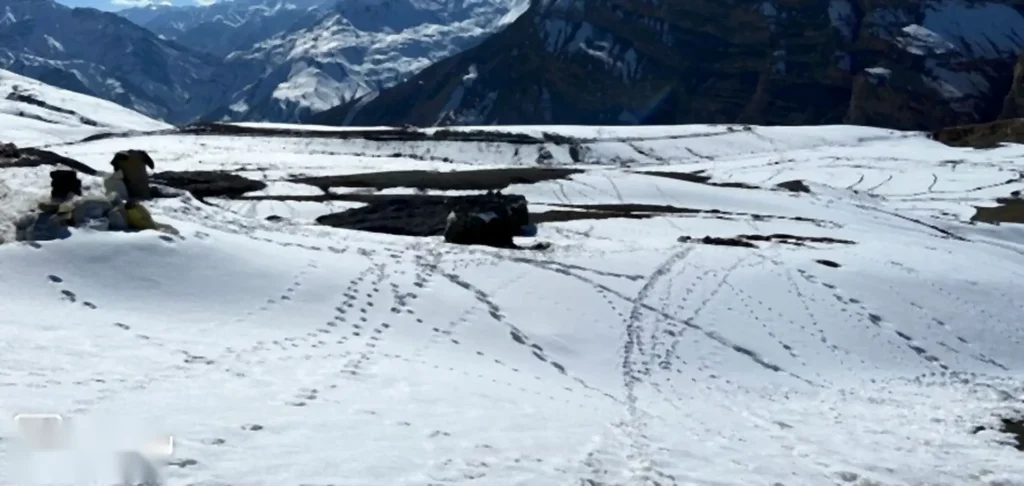

13 photographs from this journey
08
It is an 8-night / 9-day experiential winter road journey through Kinnaur and Spiti, designed for slow, mindful travellers who want to experience remote villages, monasteries, local culture and snow-covered Himalayan landscapes rather than follow a rushed sightseeing circuit.
Chandigarh → Narkanda → Kalpa → Nako → Tabo → Pin Valley → Kaza → Ki → Kibber → Chicham → Hikkim → Komic → Langza → Kalpa → Narkanda → Chandigarh. The exact winter route is condition-led.
Ancient monasteries, Nako and frozen winter landscapes, Pin Valley, Ki and Kibber, Chicham Bridge, Hikkim post office, Komic, Langza, local Spitian hospitality, regional cuisine, Kaza cafés and the possibility of seeing high-altitude wildlife. Wildlife and snow conditions are never guaranteed.
Moderate to challenging, mainly because of high altitude, severe winter temperatures, long mountain-road days and possible walking on snow or uneven winter terrain.
Winter conditions vary significantly by date, altitude and weather. Legacy operating guidance cites daytime temperatures around 0°C and nighttime temperatures roughly from -5°C to -30°C in severe winter conditions.
The reliable winter road access is from the Shimla / Kinnaur side. The Manali–Kunzum route is generally a summer route and is closed through winter. For this package, the journey begins in Chandigarh and enters Spiti via Narkanda, Kalpa, Nako and Tabo.
Normally no. The Manali–Kunzum route is generally closed during winter and reopens only after seasonal snow clearance. Winter access is normally via the Shimla / Kinnaur side.
For this winter itinerary, Chandigarh is the practical gateway and the package begins from Chandigarh. Bhuntar is useful for Manali-based travel but is not the winter access point used for this Spiti route.
The operating reference uses Treeline Cottage / Hotel Narkanda or similar in Narkanda, Kalpa Inn or similar in Kalpa, Phunstuk Homestay or similar in Tabo and Nigyma House or similar in Kaza. Winter homestays in Spiti can have limited facilities compared with city hotels, and equivalent properties may be substituted.
Breakfast and dinner are included under the current tracker instructions. Lunch and transit meals are not included unless specifically stated for a departure.
Tempo Traveller or Innova depending on group size and final operating configuration. Experienced winter mountain drivers are used for the journey.
The route can be changed, delayed or shortened for safety. If a tractor or additional 4x4 is required to cross heavy snow, the applicable extra cost is paid on the spot.
No. Winter Spiti is selected for its winter conditions, but specific snowfall, frozen-lake conditions or exact snow depth cannot be guaranteed.
Snow leopard and other wildlife sightings are never guaranteed. This Winter Spiti trip is a broader experiential road journey; a separate specialist Snow Leopard Expedition is designed specifically around wildlife tracking.
The current tracker instruction is 20% at the time of booking, with the balance due one week before departure.
Cancellation outcomes depend on timing and on applicable hotel / vehicle cancellation conditions. The legacy policy allows for a full refund in eligible cases, adjustment against another Spiti trip or a partial refund in some cases, while late cancellations may have no refund or adjustment. The exact applicable cancellation slab should be confirmed on the booking confirmation for the selected departure.
Travel insurance is strongly recommended and should ideally cover medical emergencies, evacuation, trip delays / interruption and lost luggage. Insurance is not included in the standard package unless specifically stated.
Yes. Remote winter homestays and villages can have limited heating, hot water, electricity, mobile network and ATM access. Carry cash, backup power and realistic expectations for remote winter travel.
Yes. Winter road conditions, snowfall, landslides, local access, traveller health and safety considerations can require route changes or omission of planned villages. The operating team has discretion to adapt the plan.
Thermal layers, fleece / woollen mid-layers, insulated jacket, waterproof outerwear, warm trousers, gloves, cap, warm socks, waterproof winter boots, personal medication, sunscreen, lip balm, sunglasses, water bottle, snacks, power bank, spare batteries, identification documents, cash and suitable travel insurance.
09
The details that help you decide.
Upcoming departures
10
Three more ways into the mountains.
11
Plan this Adventure or ask a curator to shape the right journey around you.